
English
define
简单句
简单句的核心(主谓宾)
简单句核心构成
谓语分类
- 实义
- 不及物动词(动作能由主语独立完成)vi—主谓
- 及物动词(动作不能由主语独立完成)vt
- 主谓宾
- 主谓双宾语
- 主谓宾补
The spooks call it "open source intelligence"
- 无实义
- 主系(联系作用)表
| 系动词 | 解释 |
|---|---|
| be动词 | 只有单独使用的时候才是 |
| get become turn go grow | 变得 |
| look sound smell taste fell | 感官动词 |
| seem apppear/keep remain/prove | 好像 保持 |
简单句核心变化
谓语动词时态
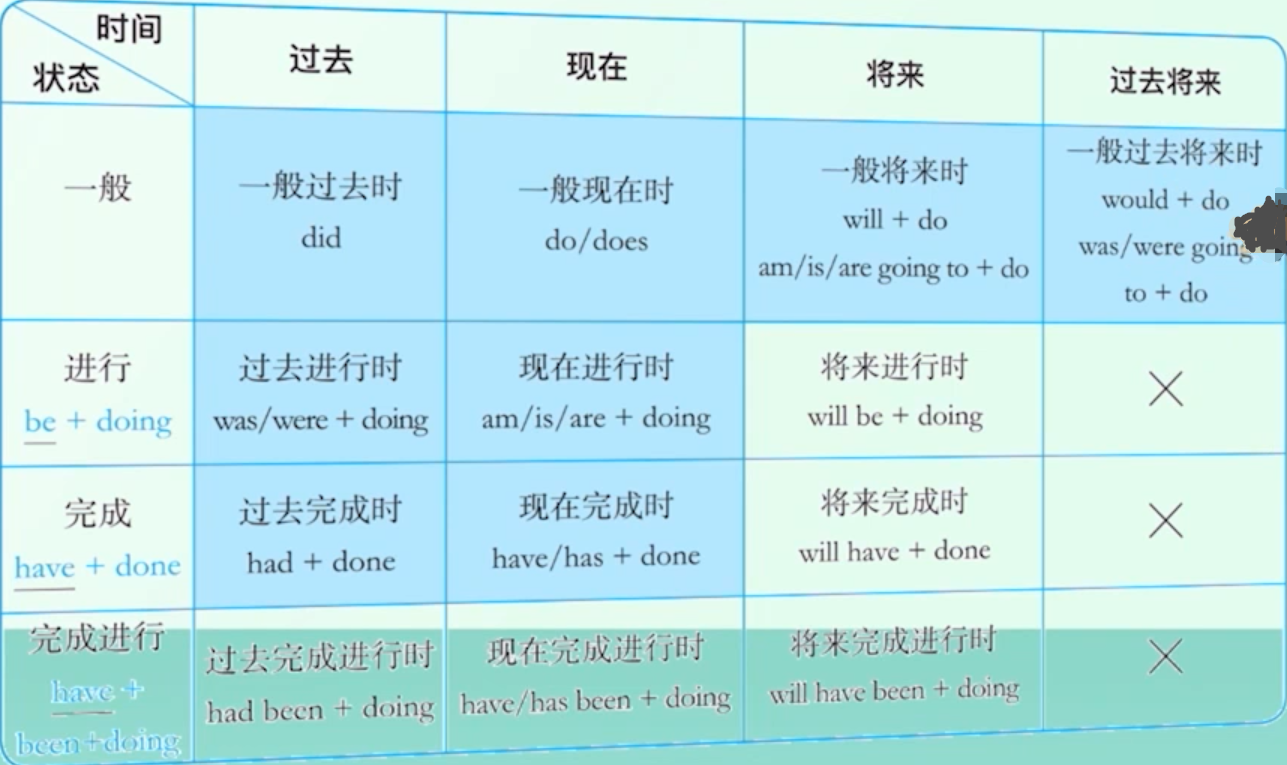
一般时态
- 一般过去时:谓语动词–did
- 一般现在时:谓语动词-do/does
- 一般将来时:谓语动词-will do am/is/are going to do (现在的将来要发生的事情)
- 过去将来时:谓语动词-would do was/were going to do (过去的将来要发生的事情,一般前面有个过去时共同出现)
进行时态
- 过去进行时:谓语动词-was/were doing
- 现在进行时:谓语动词-am/is/are doing
将来进行时:谓语动词-will be doing
完成时态:一件事情完成的结果 - have done(1全部完成 可以和一般过去时互换 2部分完成)
过去完成时:谓语动词-had done (过去之前发生的事情)
By 2020 they had finished 30% of the research.
现在完成时:谓语动词-have/has done(现在之前发生的事情)
For the most part,the reponse has been favorable
将来完成时:谓语动词-will have doneRelaxation will be in front of smell-television, and digital age will have arrived.
完成进行时 :某个时间之前,强调一件事情进行的过程
现在完成进行时:谓语动词-have/has been doing
角度相同 表示之前 表示之前 两种时态 have/has done have/has been doing 强调不同 前调结果(做完与否都可以)
We have not won the match强调过程
We have been working hard for several months过去完成进行时:had been doing将来完成进行时:will have been doing
谓语动词情态
情态动词+动词原型谓语动词最多只有现在时,过去时两种时态
| 现在时 | 过去时 |
|---|---|
| must | — |
| can | could |
| will | would |
| shall | should |
| may | might |
使用过去时可以使预期更加委婉
情态动词的人称变化无
情态动词变否定:直接加not,变疑问:谓语动词提前
情态动词表示情态
we must also act with caution.
情态动词表示推测
Such searchs can take years
三种时态
情态动词+do
情态动词+be doing
情态动词+have done
其他情态动词词组
- have to
- ought to
谓语动词语态
主动语态(主语是动作发出者)
被动语态(主语是动作接收者)
被动语态的构成:be(被动的时间)+ done(被动的动作)
被动语态和时态的结合:
意识 例子 这些评论家过去被遗忘 These critics were forgotten. 这些评论家现在被遗忘 These critics are forgotten. 这些评论家现在的将来被遗忘 These critics will be forgotten. 这些评论家过去的将来被遗忘 These critics would be forgotten. 这些评论家现过去正在被遗忘 These critics were being forgotten. 这些评论家现在正在被遗忘 These critics are being forgotten. 这些评论家过去已经被遗忘 These critics had been forgotten. 这些评论家现在已经被遗忘 These critics have been forgotten.
否定
实义动词变否定
do/does/did +not + 动词原形
助动词情态动词变否定
助动词和情态动词+not
如果同时有两个动词否定not放到第一个动词后面
each animal feels it is not being cheated.
强调
do/does/did +动词原形
Although the figure may vary,analysts do agree on another matter
技巧(通过谓语动词切分句子)
抓住谓语动词,抓住句子最核心的表述动作和内容
通过定位谓语动词,找到复杂多变的主语
通过谓语动词的数量,判断长难句中包含几件事情
The same dramatic technological changes that have provided marketers with more(and more deverse) communications choices have also increased the risk that passionate consumers will voice their opinions in quicker,more visible,and much more damaging ways.
主语/宾语/表语的变化
名词代词
The process is nature selection.
非谓语动词doing(谓语动词只能一个,非谓语动词可以多个)
有动词后再加动词使用非谓语
Suffering is ineviteable.(作主语)
Americans stopped takeing prosperity for granted.(做宾语)
非谓语动词 to do
to decide is to kill off all possibilities but one(主语)
It take sb. some to do sth.(it形式主语,to do主语)
They may then decide to go elsewhere.(宾语)
The decisions made it more difficult for states to collect sales tax on certain online puerchases.
使用it做形式宾语,句子放在末尾:句子后有补语或者句子过长
The trick is to direct these funds better.(表语)
并列多个从句
Science and technology would cure all the ill of humanity.
| 并列连词 | 表达含义 |
|---|---|
| and | 和 |
| both … and | 和 |
| not only but also | 不但而且 |
| 选择连词 | 含义 |
|---|---|
| or | 或者(二选一) |
| either or | 或者(同上) |
| neither nor | 既不也不(两者都不选) |